
Indications
- Conductive hearing loss -not amenable to surgical correction, or where there is a contra-indication to hearing aids: usually previous surgery or severe external canal disease
- Single sided nerve deafness. This is often following a severe infection, trauma, or the removal of a tumour of the hearing nerve. The principle relies on transferring the sound from the bad ear to the good ear creating the illusion of hearing again from both ears. Other options here include a BiCross hearing aid or a cochlear implant.
- Importantly it is essential to run a trial of the bone anchored hearing aid, prior to proceeding to surgery. This is performed by using a soft headband to hold the hearing aid in position.
- Whilst not giving as efficient a result as the final result it does provide a good idea as to the expected benefits.
- The surgery itself is almost always day surgery, and can be done under local anaesthesia.

Cochlear Softband: used as a trial or for young children too young to undergo implantation

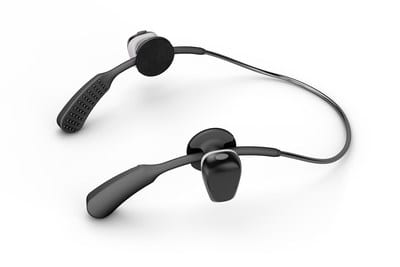
Cochlear Soundarc: an alternative trial device or a more permanent non-surgical option
Note also the Medel ADHEAR (below) a non surgical option.
Advances
A number of recent developments have significantly improved the results of bone anchored hearing aids. This includes the implantable devices as well as the external processors. Lower profile, magnetic options and wireless integration are all upgraded features.
The Devices:
Cochlear BAHA, bone anchored hearing aid
- The implant only extends 3 or 4 mm into the temporal bone – relying on osseointegration for connection between live bone and the titanium. This is then either attached to a magnet (attract) or and abutment (connect)
- Surgery is low risk, reversible and relatively simple
- MRI safe
The cochlear BAHA 5 system allows a wide fitting range with connection options and processor options.
The 3 processors are the BAHA 5 (up to 45dB), BAHA 5 Power (up to 55dB) , and the BAHA 5 Super power (up to 65dB). This allows a much wider fitting range for appropriate patients.
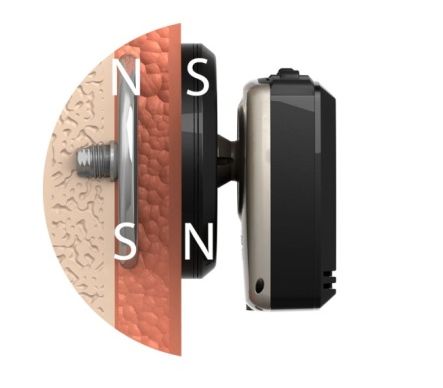
The processor can then be attached either via a transcutaneous magnet, or an abutment. The obvious advantage of a magnetic attachment is the lack of an abutment that passes through the skin that has a small risk of causing skin irritation. The advantage of the abutment is that it provides the most efficient transfer of sound.
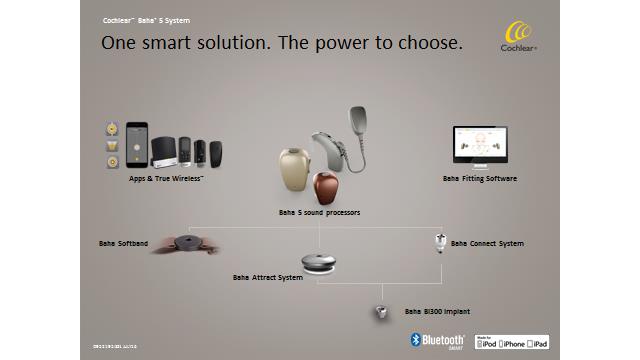
BAHA attract, which allows the placement of a subcutaneous magnet, that avoids the need for a trans-cutaneous abutment.
For further information Cochlear Baha.
Cochlear Osia
A new bone conducting implant employing piezo-electric technology to increase overall power and more importantly at higher frequencies to improve speech intelligibility.
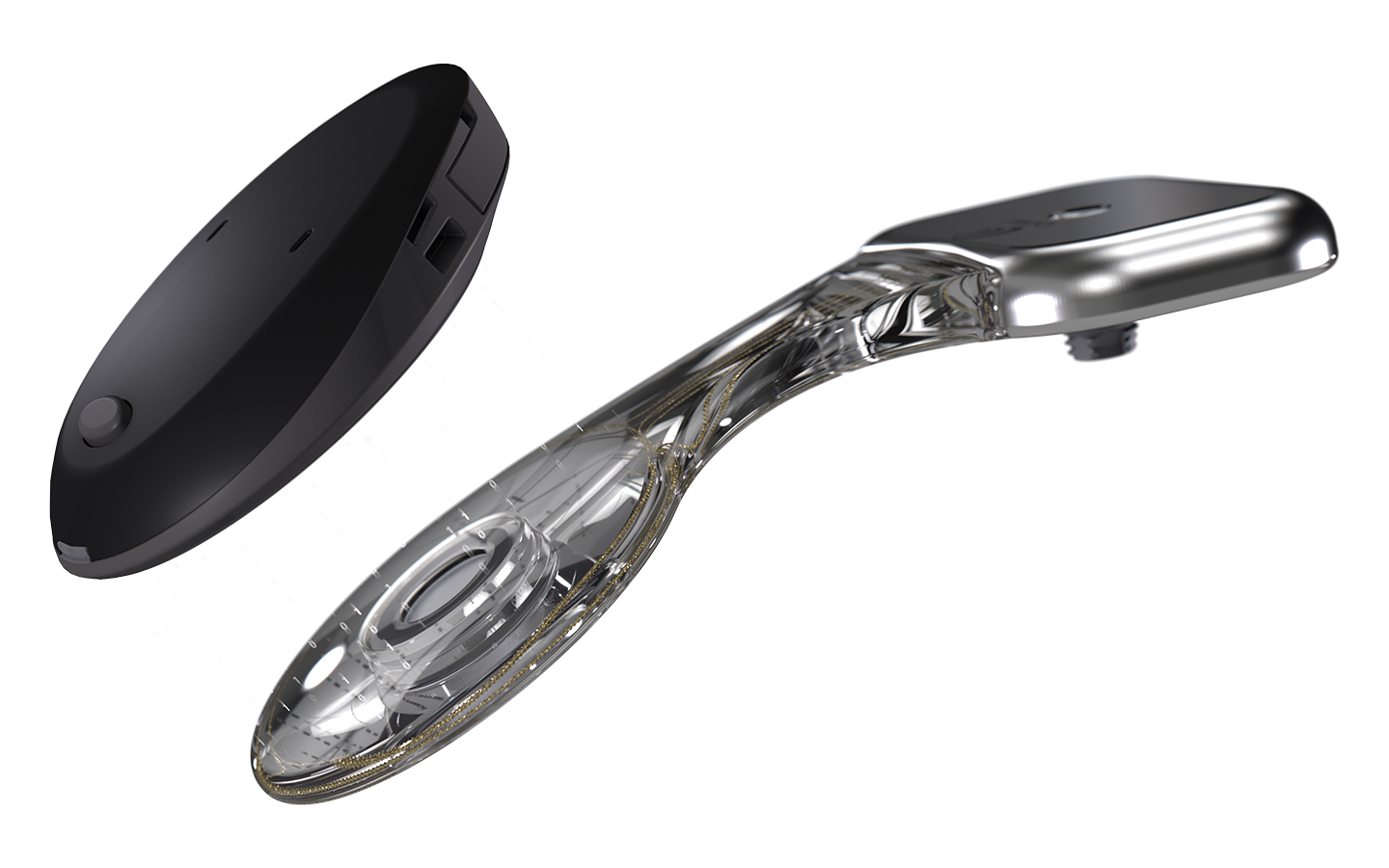
It comprises of an internal device and an external component connected via a magnet.
Medel Bonebridge
This implant is placed completely subcutaneously, requiring an adequate depth of bone: the new BCI 602 implant is significantly Once implanted the internal device connects to the external component magnetically in the same way that a cochlear implant does. The external processor, the new Samba 2, is very low profile and this also minimises feedback.
The other feature of this device is that it is an active implant. This means that the microphones of the external device picks up a sound wave and converts this into an electrical signal. This is transferred to the internal component which then converts this into a vibration. The limit of sensorineural hearing loss is 45-50dB.
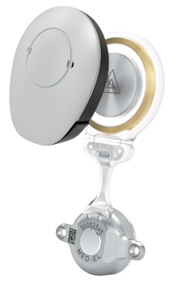
The Medel Bonebridge: Internal component and external processor
For further information Bonebridge.
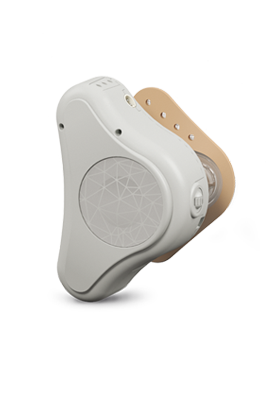
Medel ADHEAR
A processor is attached via an adhesive adapter, with no surgery required. Comfortable to wear, with no pressure on the skin.
Vibrant Soundbridge
The Vibrant soundbridge is a middle ear implant system that is a great option for hearing rehabilitation in patients with a significant conductive hearing loss not amenable to standard hearing aids. The audiologic advantage over a BAHA or a Bonebridge is that the unilateral cochlear is stimulated maximising the advantages of directionality. At this stage the device is not on the Australian Prosthesis list so is expensive, but specific cases can attract a special dispensation. In my opinion at this stage it’s best indication is for patients who have had to have the external part of the ear either removed or closed. The active part of the implant is connected to residual ossicles or even to the round window.

For further information Vibrant Soundbridge
Oticon Ponto Bone anchored hearing aids
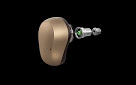 Ponto 4 Processor with osseo-integrated abutment
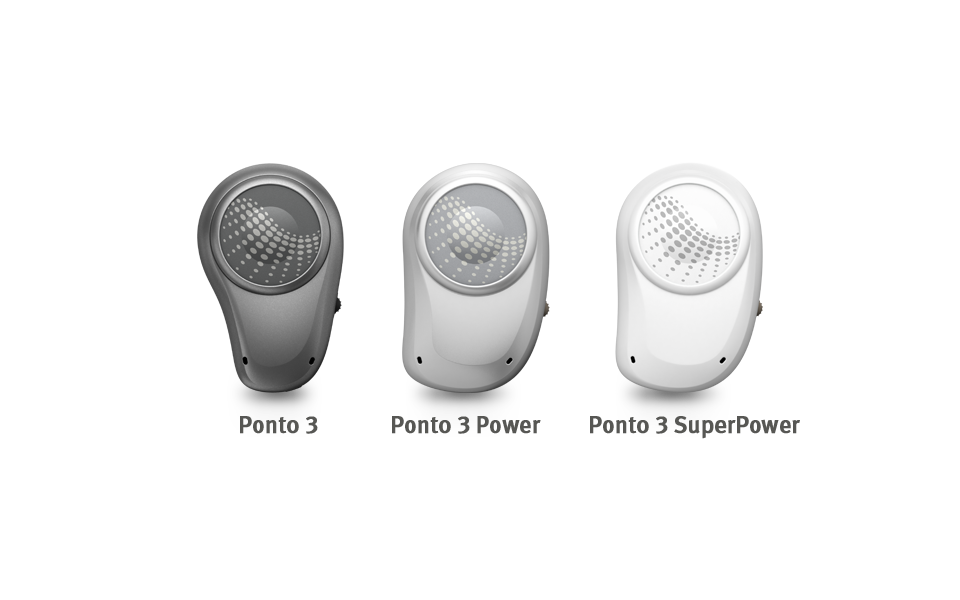
A percutaneous bone anchored hearing aid solution, using the Ponto, Ponto Power and Ponto Super Power processors.
Please do not hesitate to contact us if you have any questions or would like to make an appointment.
If you are a candidate we will discuss in more detail and arrange a trial as appropriate or discuss this with your existing audiologist.